
QUICK ANSWER
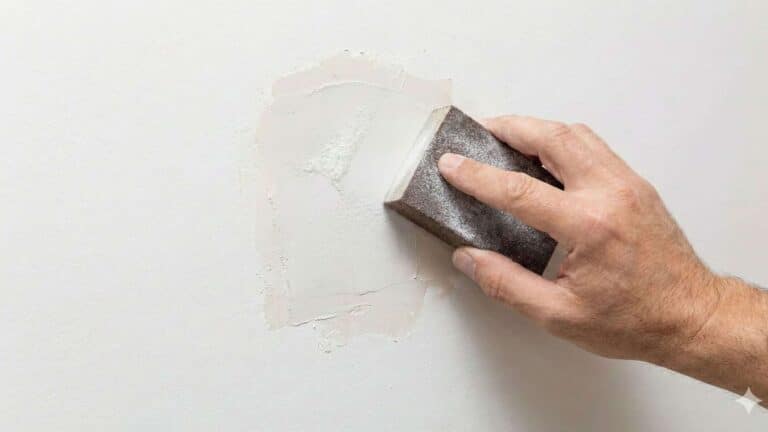
THE SHORT VERSION — FOR BUSY HOMEOWNERSKaty, TX drywall cracks faster than most U.S. cities because of three compounding forces: relative humidity regularly above 80%, expansive clay soils that shift with every rain cycle, and high-performance AC systems that create interior condensation. Standard spackle fails here. Professional drywall repair requires moisture-resistant compounds, texture matching, and root-cause moisture diagnosis before any patch is applied.
If you live in Katy, whether that’s Cinco Ranch, Firethorne, Elyson, or Old Katy, you’ve probably noticed that small wall cracks seem to return no matter what you do. You patch them, paint over them, and six months later they’re back. You’re not doing it wrong. The climate is doing it to you.
This guide explains exactly why the Katy environment is unusually harsh on drywall, how to identify damage that signals something deeper than cosmetics, and what a proper professional repair actually looks like in this market. We’ve included real data, source citations, and practical takeaways designed so you can make an informed decision, whether you hire us or not.
Why Katy, TX Is Unusually Hard on Drywall
Direct AnswerKaty experiences some of the highest sustained humidity levels in the continental U.S., with an annual average relative humidity of approximately 75% and summer mornings that routinely exceed 90%. This, combined with expansive clay soils that swell and shrink with rainfall, creates mechanical stress on walls year-round. Standard drywall is made of gypsum, a hygroscopic mineral that absorbs atmospheric moisture, making it particularly vulnerable in this climate.
Most drywall guides are written for Denver or Phoenix. Katy is on a different planet. Located in Harris and Fort Bend Counties on the Gulf Coastal Plain, the area sits atop one of the most expansive clay soil formations in North America—a geological formation called the Houston Black Clay, or “gumbo.” This soil is notorious for its dramatic volume changes.
75%
Houston’s annual average relative humidity is approximately 75%—among the highest of any major U.S. metro. Summer mornings regularly push past 90%, and the area averages over 200 days per year with humidity above 70%. For Katy homeowners, this is not a seasonal nuisance. It is a year-round structural force acting on every wall in your home.Source: NWS Houston/Galveston Weather Forecast Office — weather.gov/hgx; aggregated climate station data via weather-and-climate.com
Gypsum—the core material in drywall—is hygroscopic by nature. That means it passively absorbs water vapor from the surrounding air. In dry climates, this isn’t a problem. In Katy, where the air is effectively saturated for months at a time, your walls are slowly drinking moisture every single day.
The Three Forces Destroying Your Walls
Force 1 — Humidity & Gypsum Absorption
Force 2 — Expansive Clay Soil Movement
4″
Houston Black clay, Texas’s official state soil and the dominant soil type across the Katy metro area, forms cracks up to 4 inches wide and over 12 inches deep during dry periods, remaining open 90 to 150 cumulative days per year. This shrink-swell cycle transfers directly into home foundations and framing, making wall cracking a structural issue, not just a cosmetic one.Source: USDA Natural Resources Conservation Service — Official Series Description: Houston Black (soilseries.sc.egov.usda.gov)
Force 3 — AC Condensation & Thermal Shock
The 5 Most Common Drywall Problems in Katy Homes
Direct AnswerThe most common drywall problems in Katy, TX are: (1) peeling or bubbling joint tape, (2) nail or screw pops, (3) diagonal cracks above door frames, (4) water-stained or sagging ceilings, and (5) musty odor behind walls indicating hidden mold. Each has a distinct cause and requires a different repair approach.
| Problem | Primary Cause (Katy-Specific) | DIY Fixable? | Red Flag Level |
|---|---|---|---|
| Peeling Joint Tape | Sustained humidity softening joint compound | Rarely — texture matching required | ⚠️ Medium |
| Nail / Screw Pops | Clay soil movement + wood frame seasonal shift | Surface fix only — recurrence likely | ⚠️ Medium |
| Diagonal Corner Cracks | Foundation movement (common in Old Katy) | No — could signal structural issue | 🔴 High |
| Sagging / Stained Ceilings | AC leak or attic humidity breach | No — source must be fixed first | 🔴 High |
| Musty Wall Odor | Mold growth on back face of drywall paper | No — mold remediation required | 🔴 High |
⚠ Important: Wide Cracks = Foundation, Not CosmeticsHairline cracks under 1/16″ wide are normal settling. But cracks wider than 1/4″, especially diagonal ones above door frames or windows, can indicate foundation movement. According to the FEMA Homeowner’s Guide to Retrofitting, diagonal cracking at openings is a key visual indicator of differential foundation movement. Always have wide cracks evaluated before patching.
Why “Hardware Store” Drywall Repairs Fail in the Gulf Coast Climate
Direct AnswerPre-mixed spackle and lightweight patching compounds are designed for low-humidity climates. In Katy’s environment, they remain slightly flexible, shrink as they dry, and do not form a moisture-resistant bond. Professionally applied hot mud (setting-type compound) undergoes a chemical hardening reaction that makes it dimensionally stable and significantly more resistant to humidity—the difference between a patch that lasts 6 months and one that lasts 6 years.
Pre-Mixed Spackle vs. Setting-Type Compound (“Hot Mud”)
Walk into any Lowe’s or Home Depot in Katy and you’ll find shelves of pre-mixed joint compound. These products are convenient and work fine for small nail holes in Phoenix. In Katy, they are the wrong tool for the job.
Pre-mixed compounds are water-based vinyl products that harden simply by evaporation. They never chemically cure. In a high-humidity environment, they can remain slightly tacky, absorb airborne moisture, and eventually develop mildew. Setting-type compounds (sold as Durabond or Easy Sand) undergo an exothermic chemical reaction when mixed, similar to plaster. They shrink minimally, cure hard, and resist moisture far better.
92%
92% of homeowners surveyed reported having outstanding repairs on their to-do list, with 86% citing finances as the reason for delaying, according to a 2022 ConsumerAffairs study of 1,078 U.S. homeowners. Deferred repairs compound in cost over time. In Katy’s climate, a patch applied with the wrong compound doesn’t just fail. It can accelerate moisture infiltration into the wall cavity behind it.Source: ConsumerAffairs — Home Improvement Industry Trends Report, 2022
The Texture Matching Problem
Katy homes are overwhelmingly finished with two textures: Orange Peel (a light spray of small, round bumps) and Knockdown (a heavier, flattened splatter pattern). Both are applied with a hopper gun, and both age in place. They collect paint layers, darken, and develop a character that is almost impossible to replicate from a rattle can.
A patch without texture matching will catch light at a different angle than the surrounding wall. It becomes visible every afternoon when the sun comes through the west-facing windows. Every. Single. Day. Texture matching is not cosmetic vanity — it is the difference between a repair that looks like a repair and one that disappears completely.
The Handyman Katy Drywall Repair Process: Built for Texas
Direct AnswerA professional drywall repair in a high-humidity Texas climate involves six steps: moisture source identification, structural re-securing, moisture-resistant material selection (green board or purple board), setting-type compound application, expert texture matching with a hopper gun, and dust containment with HEPA filtration. Skipping step one, finding the moisture source, guarantees the repair will fail.
-
Moisture Assessment First. Before any compound is mixed, we identify the source of the damage. A ceiling crack without a moisture cause assessment is just cosmetic theater. We check AC drain lines, attic vapor barriers, and roof flashing because patching over an active leak is wasted money for everyone.
-
Structural Re-Securing. For nail pops and sagging sections, we re-attach the drywall to the framing using coarse-thread screws at correct spacing intervals per Gypsum Association GA-216 standards. This eliminates the movement that caused the pop in the first place.
-
Moisture-Resistant Material Selection. For bathrooms, kitchens, laundry rooms, and garages, we specify green board (moisture-resistant) or purple board (mold/moisture-resistant) rather than standard white drywall. These panels have a wax-treated gypsum core that significantly slows moisture absorption in Katy’s environment.
-
Setting-Type Compound Application. We use Durabond 45 or 90 (hot mud) for the base coat, chemically cured, hard, and moisture stable. Finish coats may use a lightweight compound for smooth sanding, followed by a mold-inhibiting primer before painting.
-
Expert Texture Matching. Our technicians adjust hopper gun air pressure, compound viscosity, and distance to match your existing texture, whether it’s a heavy knockdown from a 1990s spec build in Old Katy or a fine orange peel from a 2020 Elyson construction. We test on cardboard before touching your wall.
-
Dust Containment. Drywall dust is a respiratory irritant and will coat your HVAC filter if not managed. We use HEPA-filtered orbital sanders and plastic sheeting isolation, so the only evidence we were there is a wall that looks brand new.
Preventative Drywall Maintenance for Katy Homeowners
Direct AnswerThe single most effective thing Katy homeowners can do to prevent drywall damage is maintain indoor relative humidity between 40–60%. This requires a properly sized and maintained HVAC system, working exhaust fans in bathrooms and laundry rooms, and periodic inspection of attic vapor barriers and AC drain lines, especially before and after hurricane season.
The U.S. Environmental Protection Agency recommends keeping indoor relative humidity between 30–60% to prevent mold growth and protect building materials. In Katy, hitting the lower end of that range during summer requires an intentional approach.
- Run bathroom exhaust fans during every shower and for 15 minutes afterward. Make sure the vent exhausts to the exterior, not just into the attic.
- Monitor indoor humidity with an inexpensive hygrometer. If readings consistently exceed 60%, consider a whole-home dehumidifier on your HVAC system.
- Inspect your gutters twice a year—spring and fall—to ensure water is diverted at least 6 feet from your foundation. Poor drainage is the #1 driver of soil movement in residential lots.
- Check your AC condensate line annually. A clogged condensate drain is one of the most common causes of ceiling water damage in Katy attics. It’s a $50 service call that prevents a $1,500 ceiling repair.
- Seal finished garage drywall tape with an oil-based primer. Garages have the most temperature and humidity swings of any interior space, and their drywall tape is almost always the first to fail.
- Look up in your attic once a year. Attic temperatures in Katy can reach 140°F in July. Adequate insulation (R-38 or higher per ENERGY STAR guidelines) protects the ceiling drywall below from thermal stress and condensation.
$610
The national average cost of drywall repair is $610, with water-damage ceiling repairs running $600–$1,550, and significantly more when mold remediation is required, according to Angi’s 2026 cost data. In Katy’s climate, where moisture is the root cause of most damage, mold remediation is not uncommon. Annual AC condensate line maintenance ($50–$150) remains the most cost-effective prevention available.Source: Angi — Drywall Repair Cost Guide 2026; HomeAdvisor — Drywall Repair Cost Data 2025
DIY vs. Professional Drywall Repair: When to Call a Pro
Direct AnswerSmall nail holes under 1/2″ in low-humidity rooms are reasonable DIY projects. Anything involving water staining, texture matching, cracks wider than 1/4″, sagging ceilings, or damage in bathrooms and garages should be handled professionally, particularly in Katy’s climate, where improper materials will fail within months.
| Damage Type | DIY Appropriate? | Why |
|---|---|---|
| Small nail hole (< ½”) | ✅ Yes | Minimal skill, no texture matching needed |
| Doorknob hole (3″–6″) | ⚠️ Maybe | Texture matching makes it visible if DIY |
| Water-stained drywall | ❌ No | Must identify and stop moisture source first |
| Peeling joint tape (seams) | ❌ No | Requires feathering, re-embedding, texture |
| Ceiling repair | ❌ No | Safety, overhead work, texture matching |
| Cracks > ¼” wide | ❌ No | May indicate foundation issue — needs assessment |
| Bathroom / garage drywall | ❌ No | Requires moisture-resistant materials |
Frequently Asked Questions
Ready to Fix Those Walls for Good?
We serve Cinco Ranch, Firethorne, Old Katy, Elyson, Cane Island, and surrounding communities. Free estimates, transparent flat-rate pricing, and no mess left behind.
Or call/text us directly: (281) 346-9483
Sources & References
-
Angi. (n.d.). How much does drywall repair cost? https://www.angi.com/articles/how-much-does-drywall-repair-cost-small-holes.htm
-
ConsumerAffairs. (n.d.). Home improvement industry trends. https://www.consumeraffairs.com/homeowners/home-improvement-industry-trends.html
-
Energy Star. (n.d.). Recommended home insulation R-values. https://www.energystar.gov/saveathome/seal_insulate/identify-problems-you-want-fix/diy-checks-inspections/insulation-r-values
-
Federal Emergency Management Agency. (2018). P-2006, Residential cladding systems in high-wind regions. https://www.fema.gov/sites/default/files/2020-07/fema_p-2006.pdf
-
Gypsum Association. (n.d.). https://gypsum.org/
-
HomeAdvisor. (n.d.). How much does it cost to repair drywall? https://www.homeadvisor.com/cost/walls-and-ceilings/repair-drywall/
-
National Weather Service. (n.d.). Houston/Galveston, TX. https://www.weather.gov/hgx
-
Natural Resources Conservation Service. (n.d.). Houston Black series. U.S. Department of Agriculture. https://soilseries.sc.egov.usda.gov/OSD_Docs/H/HOUSTON_BLACK.html